By Moreta Bobokhidze and Nicolay B. Johansen
In the effort to spread knowledge and understanding of the democratic rule of law, ModusA has initiated a collaboration with Georgian activists. In this text, we compare the rule of law in Georgia and Norway. The concept of the rule of law is discussed in more detail here.
Georgia is a small country with an area and population of less than 4 million. It is located in the Caucasus, beyond Turkey, i.e., further away from Norway than Ukraine, but in about the same direction, between the Black Sea and the Caspian Sea. Georgia, like its neighboring countries, Armenia and Azerbaijan, was a Soviet republic until 1991. Georgians have long wanted to move toward the West and Europe. For example, they regularly participate in the «European song contest». On the political level, they have been trying to build a market economy and a rule of law based on democratic principles for the past 34 years. The 2024 election was apparently decided after extensive electoral fraud, and subsequently, the ruling party has followed the recipe for authoritarian and totalitarian governance, evidently under Russian influence.
It is not easy or quick to build democratic states under the rule of law. It is not made easier by the fact that knowledge and understanding of this social formation have been too weak. After the fall of the Berlin Wall in 1989, for example, they wanted to introduce a market economy in Russia. They became overzealous in their market thinking, and forgot (or perhaps did not know) that a market economy requires stable and strong institutions such as courts, administration, and police. The result was the mafia empire we see today, where a layer of super-rich oligarchs operates under the rule of the supreme leader. What we call corruption is their power structure. The press is gagged, politics is controlled, and the courts are subject to the interests of the president. Opposition to the regime, what we others call ordinary political disagreement, results in fines, imprisonment and liquidation. Russia cheats in sports, wages hybrid war against Europe and wars of invasion over former Soviet states with a brutality we thought was historically left behind. Russia’s path out of communism has so far ended in failure and disaster, largely because they failed to build stable institutions.
How to build a rule of law? The American political scientist Francis Fukuyama has written thousands of pages about the emergence of functioning democracies and rule of law. He uses Denmark as a model, but also says that he could just as easily have used Norway. It took over a hundred years to establish the rule of law in Norway. It was not without conflict, and it was under different circumstances. But the Norwegian experience can be used by others, as an example that it is possible.
In ModusA, we will use Norway as a mirror on Georgia, and Georgia as a mirror on Europe and the West. We will spread a better understanding of what a market-based democratic rule of law is and how it works. We will use the Georgian struggle today to highlight the various dimensions of the rule of law. At the same time, we will use Norwegian experiences as a contrast to Georgia’s political strife. Everyone can find something to learn.
The rule of law – an overview
Compared to Norway, Georgia is only in the initial phase of building a constitutional state. They gained their independence 34 years ago, while Norway has 210 years of experience. Georgia also had a different background, with over 70 years of totalitarian rule.
Norway became free from a Danish, largely benevolent overlordship in 1814. From the start, Norway was a poor country with a poor population. Norway was a stretched country without proper roads, a limited postal service, and no banks of its own. The civil service was educated in Copenhagen (then Norway’s capital) and was dominated by Danish families. The Danes, though, had established a university in 1811, three years before independence. With the liberation in 1814, Norway got a very modern Constitution in line with the ideas of the Age of Enlightenment. The separation of powers was enshrined in the Constitution along with several other constraints on state power.
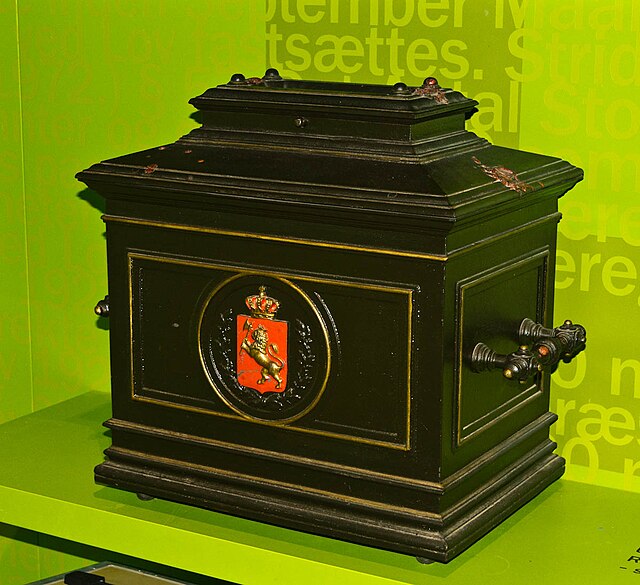
Norway was otherwise on bare ground in many respects, and perhaps even more importantly, without hatred towards the former colonial power. Norway gained a new colonial master in 1814: Sweden. Still, at the same time, it gained strong independence under the Swedish king (only foreign policy was outside Norwegian influence and control). A nascent public sphere emerged. Norway saw an emerging national moderate movement and a relatively homogeneous society. In addition, a peaceful external «enemy» in the east (Sweden). In the 19th century, Norway was given the freedom to establish a Parliament, ministries, and a banking system slowly. Eventually, the Supreme Court came into place.
Gradually, an economic elite and a mostly uncorrupt civil service emerged. The industrial revolution hit Norway as in other Western countries, and progressively they caught up with the other countries’ economic lead. Norway developed a more modern governance system, but, first and foremost, it was equipped with a fine-meshed network of control mechanisms. Rights were supplemented with institutional support. The state and people in power were forced to be accountable for decisions, large and small.
In the next century, the state grew even further, and large-scale welfare schemes slowly emerged. At the end of the century, Norway became a wealthy country through the discovery of oil.
One could argue that the Norwegian rule of law was consolidated around the turn of the last century. Historians state that at that time Norway had a civil service that operated “civil servant-like”, that is, professionally. They enforced rules based on objective criteria, without taking into account who benefited from the decisions.
That is the opposite of corruption.
No state and administration can be expected to act entirely according to the law. How the rules are adapted and bent within a rule of law state will be a topic further in the project Democratic Resilience. What we can say is that Norway had a functioning rule of law around the turn of the last century, and that it still ranks high among non-corrupt countries.
The georgian dream
“Georgian Dream” is the name of the ruling party in today’s Georgia. The dream after 1991, and even more clearly after 2003, was to be linked to Europe. All attempts at governance in Georgia since 1991 have collapsed due to corruption and autocracy. The Georgian state is not strong enough to resist the president’s use of power. No control mechanisms have proven effective, not this time either.
Georgia has had slightly different conditions than Norway. They gained sovereignty after a long period of totalitarian rule. Totalitarian states create «vertical» power structures, that is, they bind people together in relationships of superiority and subordination. The population was characterized by work on the land, like in Norway, but with far more ethnic groups. There is a big gap between life in the cities and in the countryside. Whoever becomes president must first be very rich or famous. Preferably both. All attempts have ended with corruption, but also rebellion. Democracy has functioned as a control mechanism. Until recently.
Georgian Dream has been at the forefront of the turn towards Europe since 2012. But then they started to renege on their promises to seek EU membership. They reneged on their promises to liberalize LGBT legislation and began to play on nationalist sentiments. The patterns are familiar from Hungary, Poland and Russia itself. And then they tried the Russian trick, banning local organizations from receiving funding from abroad, demonizing them as “foreign agents”. The Georgians called it the “Russian law” and thus Georgian Dream lost support among the population. Democracy was again at work, but the people were not prepared for widespread election fraud. The official result was a re-election for Georgian Dream. The Georgian people have been protesting the election results in the streets of the capital, Tbilisi, for a year.
Moreta Bobokhidze has organized and participated in these demonstrations. She will report from the front lines of democracy and the rule of law on a regular basis for ModusA.
Here, you can read more about the lessons to be drawn from democracies in demise.
If you want more insights into the workings of democracies and the rule of law and its challenges, we recommend that you (fore example) subscribe to Persuasion Community, OCCRP or Journal of Democracy.