
By Moreta Bobkhidze, 4 minutes read
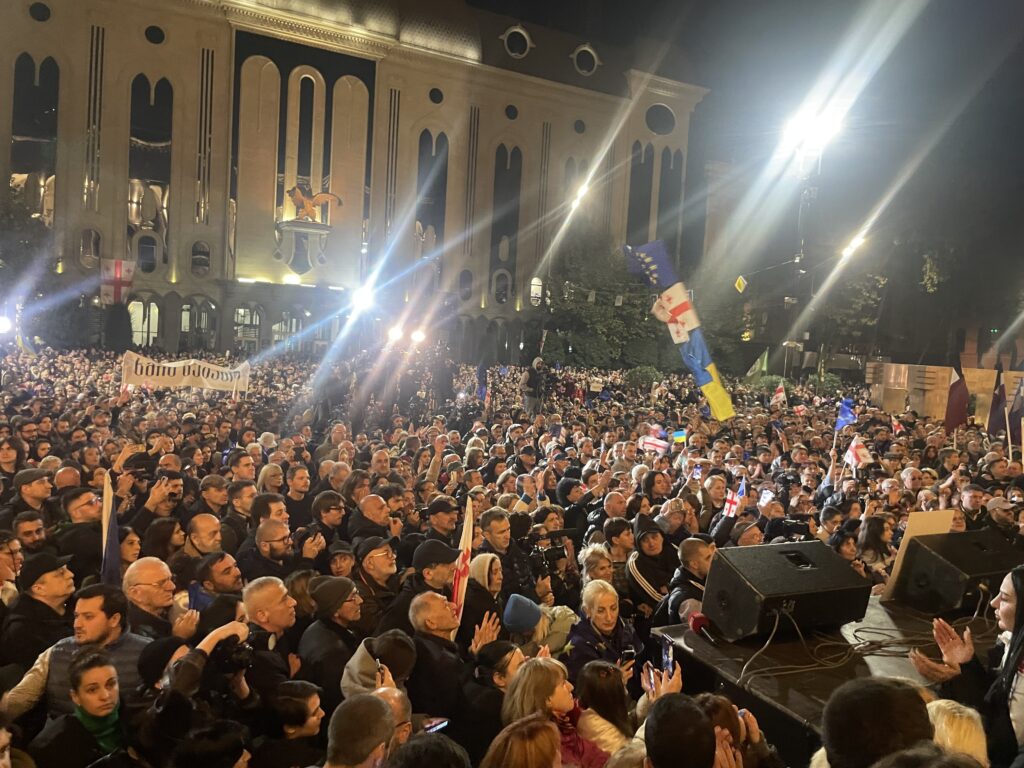
The protests against the ruling Georgian Dream party are now in their second year. Protesters are being met with increasing violence. The dismantling of democracy is taking place in many small steps. This is also important for Norway and Europe.
The ruling Georgian Dream party has unveiled plans to amend the country’s Electoral Code, proposing to abolish voting rights for Georgian citizens living abroad. The initiative has sparked widespread debate, with critics warning that it could undermine democratic participation and disenfranchise a significant portion of the electorate.
Parliament Speaker Shalva Papuashvili announced that Georgian Dream intends to close overseas polling stations. Under the proposed changes, Georgian citizens residing abroad would need to return to Georgia in order to cast their votes in parliamentary elections. The party argues that the measure is designed to strengthen electoral integrity and reduce the risk of foreign influence.
Opposition parties and democracy advocates have strongly condemned the plan. Giorgi Sharashidze, an MP from the For Georgia party, described the initiative as “absurd, unconstitutional and anti-state,” pledging to block its passage. Civil society groups and members of the Georgian diaspora have also voiced concern, noting that the proposal would make it nearly impossible for emigrants to participate in elections.
According to Georgia’s Ministry of Foreign Affairs more than 1.5 million Georgian citizens are currently living abroad. This figure is considered unofficial, as many Georgians reside without formal registration in foreign countries, but it provides the most recent government estimate. Observers warn that eliminating overseas voting would further marginalize emigrants, many of whom contribute economically and socially to Georgia while maintaining strong ties to the country. Analysts suggest the move could have significant political consequences.
The Georgian diaspora has historically leaned toward opposition parties, raising questions about whether the proposal is politically motivated. Critics argue that restricting emigrants’ voting rights risks damaging Georgia’s democratic reputation and complicating its aspirations for closer integration with European institutions.
While Georgian Dream frames the initiative as a safeguard against external interference, opponents see it as a step backward for democratic inclusivity. The debate is expected to intensify as the proposal moves through parliament, with its outcome likely to shape both Georgia’s domestic political landscape and its international standing.