
By Moreta Bobokhidze, 3 minutes reading time
On 9 April 1989, the Soviet empire showed its true face in Tbilisi. Peaceful demonstrators, students, young women, ordinary citizens stood on Rustaveli Avenue demanding nothing more radical than freedom. Moscow responded with troops armed with sharpened spades, gas, and orders to crush. The spades were used to cut people. By morning, 21 people were dead, hundreds were wounded, and more than 4,000 suffered long‑term health damage. This was not a tragedy. It was an execution. It was a message. And the message was simple: Georgia must be punished for wanting to be free.
The Soviet Union collapsed soon after, but the logic behind the massacre never did. Georgia declared independence on 9 April 1991, exactly two years later, but Moscow did not forgive or forget. Instead, it shifted tactics. The empire changed its flag, not its instincts. Throughout the 1990s, Russia fueled and armed separatist conflicts in Abkhazia and South Ossetia, enabling ethnic cleansing and mass displacement. In 2008, it launched a full‑scale war, killed civilians, and occupied 20% of Georgia’s territory. And when tanks were no longer the most efficient tool, Russia turned to hybrid warfare – economic blackmail, disinformation, cyberattacks and political interference. Now and then they moved the border The methods evolved; the intention stayed the same.
Every time Georgia moves toward Europe, Russia retaliates. Every time Georgians assert their identity as a sovereign nation, Russia attempts to break them. The violence of 1989 was not an isolated moment of Soviet brutality it was the blueprint for decades of pressure. It was the first chapter in a long campaign to discipline a nation that refuses to kneel.
And yet, despite war, occupation, propaganda, and the constant threat of destabilization Georgia endures. The people who were attacked on Rustaveli Avenue were unarmed, but they were not weak. Their courage forced the Soviet Union to reveal its fear. Their deaths accelerated the collapse of an empire. Their memory continues to fuel a society that refuses to surrender its future.
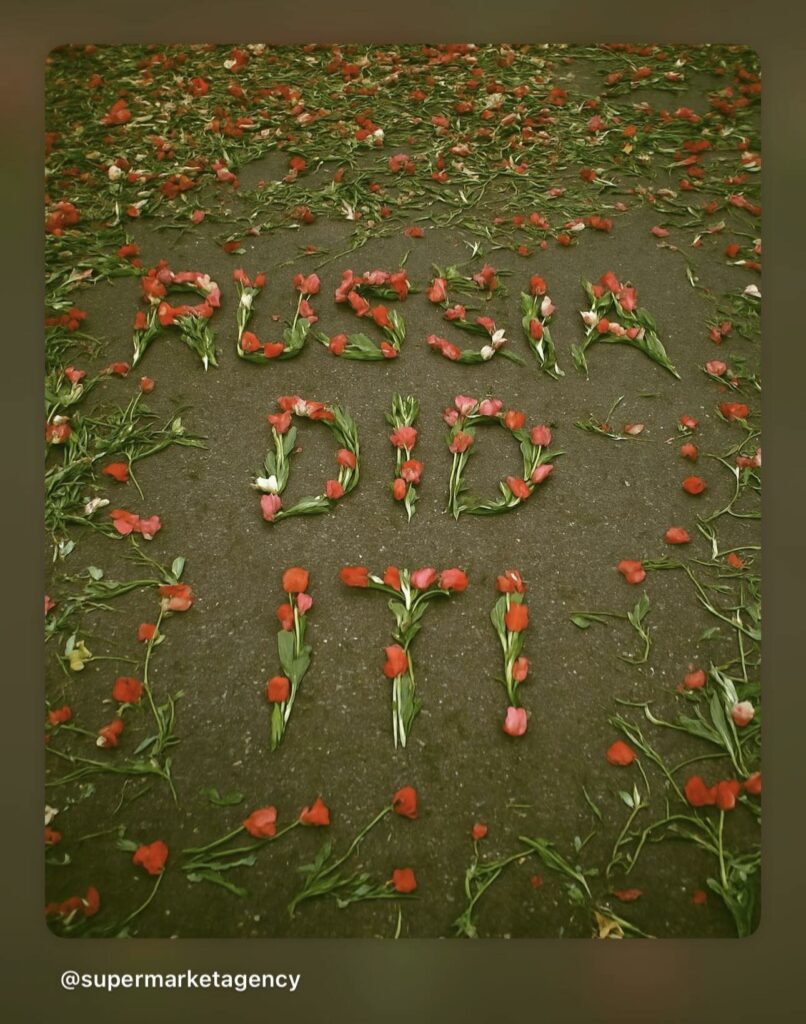
More than three decades later, 9 April is not only a day of mourning. It is a day of accusation. A day of truth. A day when Georgia looks directly at the violence that shaped its modern history and names it without hesitation: Russia did it. Russia ordered the crackdown. Russia tried to break the nation. Russia continues to punish Georgia for choosing Europe, democracy, and dignity.
But Georgia is still here louder, clearer, and more determined than ever. The empire that tried to silence it is gone. The empire that replaced it is shrinking. And the people who stood on Rustaveli Avenue in 1989 did not die in vain. They forced a reckoning. They ignited a movement. They proved that even the most brutal force cannot extinguish a nation’s will to be free.
Georgia remembers. Georgia resists. Georgia will never return to the darkness from which it fought its way out.