By Moreta Bobokhidze
Georgia’s summer of 2026 unfolded not as a season of political calm, but as a period of intensified democratic strain. Observing from afar, I found myself tracing developments with a mixture of analytical distance and emotional proximity; a duality familiar to many Georgians living abroad. This summer revealed not only the fragility of Georgia’s democratic institutions, but also the resilience of its citizens. It also raises at least 4 urgent policy questions for international partners who continue to view Georgia as a strategic, values‑based ally.
1. Protest as a Persistent Democratic Instrument
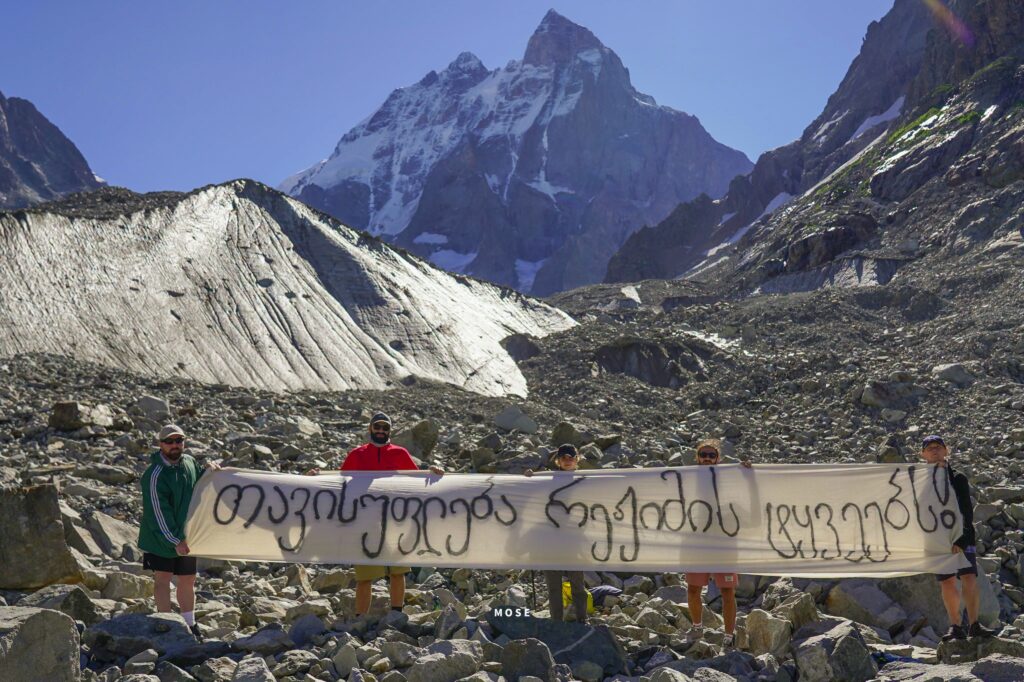
Georgia’s protest movement now surpassing 600 days has become one of the longest sustained civic mobilizations in Europe. What began as resistance to the shutdown of civil society and political opposition (the “foreign agents’ law”) has evolved into a broader struggle over Georgia’s democratic trajectory and its suspended EU integration process.
Daily gatherings on Rustaveli Avenue demonstrate that public commitment to European norms remains strong. Polling consistently shows over 75% of Georgians support EU membership, a figure referenced in multiple civil society reports. CIVICUS continues to classify Georgia’s civic space as “Repressed”, documenting fines, detentions, and pressure on activists.
From a policy perspective, this raises a critical question:How sustainable is civic resistance when institutional channels for democratic accountability are narrowing?
2. Freedom of Expression Under Administrative Pressure
This summer marked a significant escalation in state pressure on journalists and online speech. The Ministry of Internal Affairs activated its Hate Speech Prevention Division, which has already initiated administrative cases against critical voices.
A journalist received 14 days of detention for a Facebook post; another was fined nearly €2,000 for online criticism. These cases align with patterns documented in Amnesty International’s Anatomy of Repression – Georgia: 500 Days of Protest, Crackdown and Resilience.
The trend suggests a shift toward administrative censorship, where speech is not criminalized outright but punished through fines, detentions, and bureaucratic pressure.
This raises a policy dilemma:Can Georgia’s democratic partners effectively support media freedom when repression is increasingly administrative rather than overtly legislative?
3. Infrastructure Instability and Public Trust
Georgia experienced three nationwide blackouts in early August, disrupting transportation, communications, and daily life. The official explanation technical testing at the Enguri Hydropower Plant did little to reassure a public already skeptical of institutional transparency.
Infrastructure instability is not merely a technical issue; it intersects with governance. Repeated outages during a politically tense summer risk eroding public trust in state capacity and crisis management.
A key policy question emerges:How does infrastructure fragility affect democratic legitimacy in a country already experiencing political polarization?
4. Historical Memory as a Political Arena
The anniversary of the 2008 Russia–Georgia war once again became a focal point of political contestation. Large commemorative marches underscored the enduring salience of sovereignty and security in Georgian political identity.
Yet the launch of a treason investigation against an opposition figure for comments related to the conflict illustrates how historical memory is increasingly weaponized. The OSCE’s recent fact‑finding report under the Moscow Mechanism warned of escalating pressure on opposition voices and misuse of legal instruments. (Official link varies by publication date; OSCE reports available at: https://www.osce.org/odihr)
This development raises a deeper question:What happens to democratic discourse when interpretations of national trauma become grounds for legal prosecution?
A Summer That Revealed Both Fragility and Strength
Despite institutional pressures, Georgia’s democratic resilience remains rooted in its citizens. This summer, I observed from afar countless acts of civic commitment:
- A grandmother in Kutaisi protesting “for her grandchildren’s future.”
- Teenagers in Batumi organizing a march with handmade EU flags.
- A father in Tbilisi teaching his daughter that “freedom is practiced, not inherited.”
These stories illustrate a critical policy insight: Georgia’s democratic future depends less on current institutions and more on the civic culture that refuses to disappear.
Georgia did not collapse this summer. It endured.
But endurance is not a long-term strategy. It is a holding pattern one that cannot substitute for institutional reform, political accountability, or renewed democratic commitment.
As autumn approaches, I find myself hoping that Georgia’s remarkable civic resilience will eventually translate into political momentum. Because if this summer proved anything, it is that the people have not given up. And in Georgia, that has always been the beginning of transformation.
Georgia’s summer developments carry implications for the EU, OSCE, and democratic partners:
- Administrative repression requires new monitoring tools. Traditional human rights indicators may miss the subtler forms of pressure now emerging.
- Support for independent media must adapt to financial and legal vulnerability. Detentions and fines create economic precarity that international assistance can help mitigate.
- Civic resilience should be treated as a strategic asset. Long-term support for youth movements, local NGOs, and community initiatives is essential.
- EU engagement must remain principled but flexible. Georgia’s suspended accession process risks creating a vacuum that authoritarian actors can exploit.