
By Moreta Bobokhidze, reading time: 5 minutes.
Former Georgian Prime Minister Irakli Garibashvili was sentenced to five years in prison after pleading guilty to large‑scale money laundering, marking one of the most significant prosecutions of a senior political figure in the country’s recent history. The announcement was made by Georgia’s Prosecutor General’s Office, which confirmed that the plea agreement had been approved by the Tbilisi City Court. Garibashvili also received a fine of one million lari and saw the confiscation of assets and cash that investigators described as proceeds of criminal activity.
Garibashvili, who served two non‑consecutive terms as prime minister, first from 2013 to 2015 and later from 2021 to 2024, had long been regarded as a close ally of billionaire and former prime minister Bidzina Ivanishvili, widely viewed as a central figure in Georgian politics. His arrest followed a series of coordinated law‑enforcement raids in October, during which authorities reported seizing approximately $6.5–7 million in cash and assets from his residence and those of associates. Prosecutors stated that the funds had been falsely declared as gifts from family members, while investigators alleged they were tied to commercial activities conducted during his years in government service.
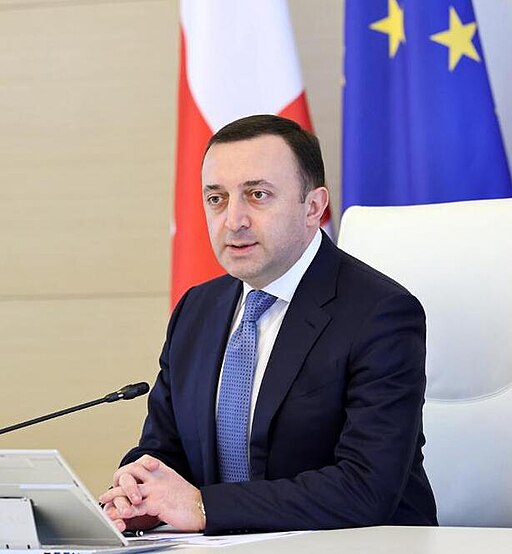
Garibashvili’s sentencing comes as part of a broader wave of political reshuffling within the ruling Georgian Dream party, which has seen several high‑profile figures removed or sidelined in recent months. Critics argue that the prosecution reflects internal power realignments, while supporters of the government frame it as evidence that the justice system is capable of holding even the most influential figures accountable.
Reactions to the sentencing have been mixed. Government officials emphasized the legal basis of the plea agreement and the importance of upholding the rule of law. Opposition leaders, however, questioned whether the process was politically motivated or selectively applied, pointing to the timing of the arrest and the broader political climate. International media outlets have noted that the case may have implications for Georgia’s political stability and its aspirations for closer integration with European institutions (see also the ECHR decision from late 2025).
Despite the polarized environment, analysts agree that Garibashvili’s conviction represents a rare moment in which a senior member of Georgia’s governing elite has faced criminal consequences.
It is always problematic to use punishment against political opponents. Liberal states have built-in barriers against doing so, because politics is, in a way, “sacred.” Politics is a competition for power without violence. Whoever starts using violence, which punishment in fact is, opens the door for opponents to do the same. Thus, the community of disagreement on which politics depends collapses. The question is whether it is not already too late in Georgia, for this time around.