
8 months into Trump’s second term as president, we must establish that he is serious about abolishing democracy. So, what to do?
The words he blurted out during the election campaigns should be understood literally. He asked people to vote for him, because then they would not have to vote several times. And on another occasion, he urged violent groups to get ready. All the talk about freedom of expression and openness from him and his supporters turned out to be nothing but lies. He had already used the first tool of totalitarian regimes, to undermine the institutions of truth. When nothing is true, anything is possible, and Trump has already deployed the military against parts of his own population. He has militarized the immigration police, he allows abuses against people who have lived in the United States for a long time and sends them out without law or trial. And he openly says that he «hates» his opponents.
This list only highlights a small part of the decline in the United States. We are uncertain whether next year’s elections will take place or meet democratic standards. However, there is ample evidence that democracy in the United States is near collapse.
Norway has maintained a close relationship with the United States for more than a century, and since World War II, the U.S. has served as the guarantor of peace and stability. During this time, Norway has evolved into a well-functioning welfare state where most people have achieved a standard of living that has never been seen in world history. The Trump administration’s dismantling of democracy, as the news reports minute by minute, should both make us tremble and serve as a lesson.
Historically, stable, democratic welfare states are a recent development. However, we have experienced significant and tragic events related to the collapse of democracy. In Europe, we cannot talk enough about World War II. Germany, under Hitler’s leadership, initiated a war that lasted nearly six years and resulted in over 70 million deaths worldwide, including systematic attempts to exterminate Jews. 1945 has been called “Year 0” in Europe, marking the start of reconstruction. From the ruins, a civilization emerged focused on the question “how can we prevent this from happening again?” In Norway, we said “never again.” What was supposed to never happen again eventually became centered on the extermination of the Jews, the Holocaust.
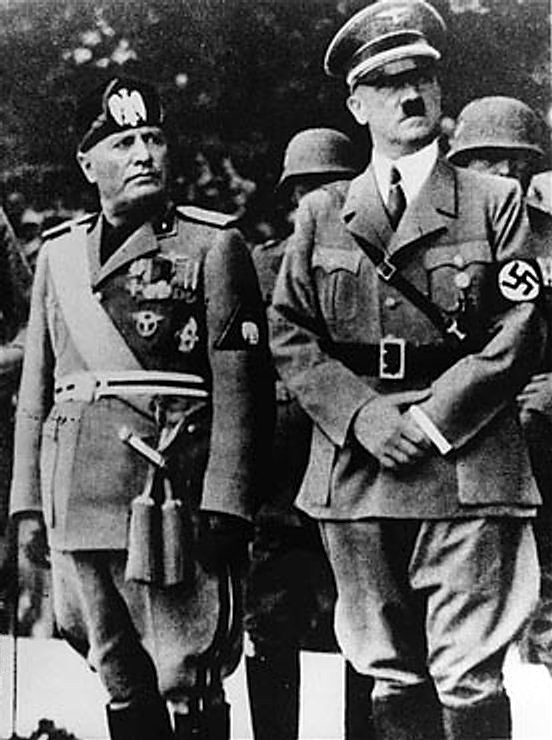
The big question was: How could it happen? It occurred, in part, because Hitler abolished democracy in Germany and made violence acceptable as a way to gain power. Western civilization has centered around this issue ever since. We established human rights, the UN, constitutional protections, and courts. But there are no guarantees—if the majority chooses to use violence against the minority, no constitutional order can ensure it will never happen again. All we have is a shared awareness of the dangers that exist.
What is happening in the United States right now shows that its citizens are not sufficiently aware of these dangers. They did not start a Holocaust, but they are following the same path that Hitler and Mussolini took in the first half of the 20th century, with only minor deviations from the original. It makes historians and many of us shudder, but it also calls for something from us. It requires us to familiarize ourselves with the protective mechanisms available in Western democracies.
In 2018, authors Steven Levitsky and David Ziblatt wrote a book titled “How Democracies Die” that was widely distributed. In it, they summarize lessons from past experiences with societies and states that abandon democracy and become autocracies (the word “dictatorships” is too strong). Because it has happened many times, not only in Germany in 1933 and Italy in 1922, but also many times it has corrected itself, as in Chile.
ModusA has produced a note based on the book by Levitsky and Ziblatt. This note can be an insight into some important points for preserving democracy, if only here at home. The note can be found here.