
By Nicolay B. Johansen, LovUrett and Moreta Bobokhidze, ModusA
Reading time 4 minutes. Norsk versjon her.
There is light at the end of the tunnel when the EU announces demands to Russia for a long-term peace solution. The EU deliberately mirrors Russia’s absurd demands for peace, when they demand free elections in a country that is run like a dictatorship. Most encouraging, however, is that the EU shows that they understand that we must see the entire region together and demand that Russian forces withdraw, also in Georgia.
Today marks 4 years since Russia launched a full-scale invasion of Ukraine. Most independent observers believe that up to a million people have lost their lives in the hostilities, including 15,000 Ukrainian civilians. In addition to the losses of their relatives, there are all the injured, those who have been captured (and tortured), the suffering of everyday war, and not least the abducted children.
The special operation that was supposed to last three days is now entering its fifth year. These are years that have shaped the world in several ways. On the battlefield, the fronts have seemingly frozen. But beneath the surface, warfare has completely changed its character. Drones have taken over, and the front lines have been replaced by 30-kilometer-wide no-man’s-land between the parties. Nevertheless, it is primarily a war of attrition that is taking place, and Europe is now financially guaranteeing Ukraine’s war for several years to come. Russia, for its part, is «the most sanctioned country in world history.» Although they manage to circumvent many of the West’s sanctions, the loopholes are becoming smaller and fewer. The Ukrainians have developed their own weapons systems with the ability to hit not only Russia’s weapons production, but also its energy sector and strangle its revenues. More and more observers are now commenting that Russia’s economy is no longer sustainable and that there is strong unrest within Russian elites. When the US-based Starlink satellite system, led by the dubious figure Elon Musk, suddenly makes its signals unavailable to the Russians, this causes a shift along the front lines whose scope we do not yet understand. In any case, it has given the Ukrainians a great advantage, for as long as it lasts.
Norwegian military experts say the war is at a standstill, but the Finnish president believes Ukraine is winning. Thus, there are hopeful signs, even in countries at risk of further aggression, such as Georgia.
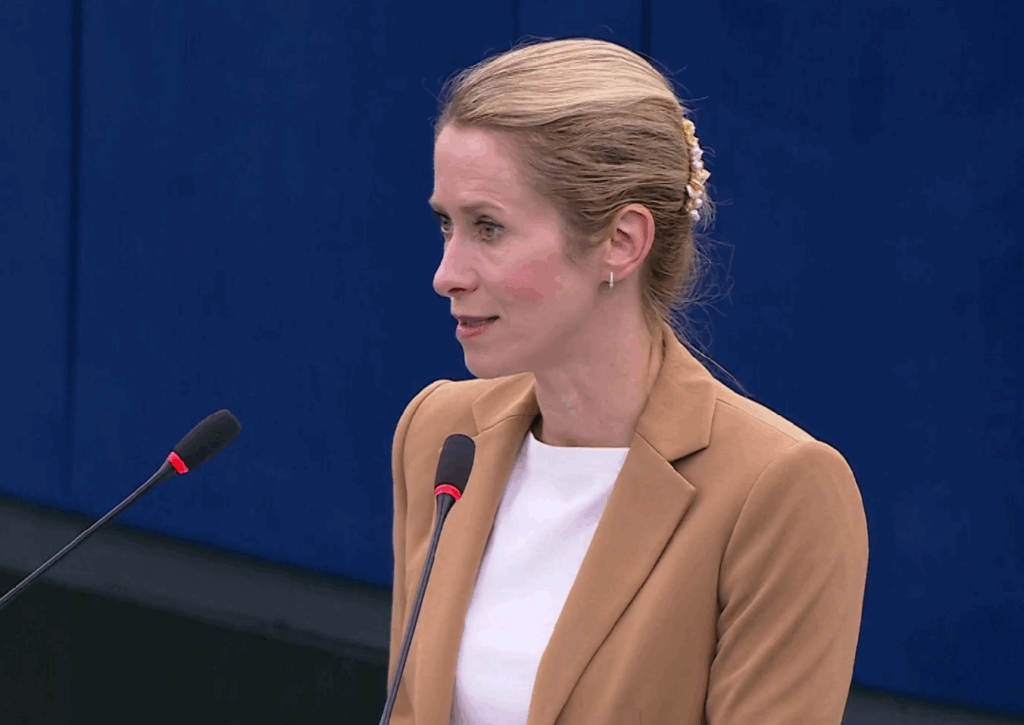
A year ago, the US effectively ended its support for Ukraine. It has since tried to negotiate an agreement on its own, narrowly interpreted national terms, and pressured Ukraine to lay down its arms. The European countries have gradually compensated for the US economic and military support, but the US is still pushing ahead in so-called peace negotiations. They are demanding more or less the same as Russia: that Ukraine give up territory, hold elections, and reduce its military capacity, without any counter-demands from the Russians. The absurdity of this is only surpassed by the fact that the EU and Europe are not invited to the negotiations. Now, the EU is advancing demands for a lasting peace deal. According to leaked documents, the EU is to demand that the Russians hold free elections and withdraw their troops, not only from Ukraine, but also from Belarus, Georgia, Armenia, and Transnistria. In addition, the nuclear weapons are to be recalled from Belarus, and the Russians are to pay war reparations.
Norwegian military experts say the war is at a standstill, but the Finnish president believes Ukraine is winning. There is reason to hope, even for people in countries that are at risk of further aggression, such as Georgia.
This means that the EU sees Russia’s military presence in Georgia as a threat to Europe’s security and that the EU is willing to put its weight behind the fight for more than the independence of Ukraine. On this day that we mark the full-scale invasion of Ukraine, it is worth remembering that the invasion began long before. After the Maidan uprising (2013-2014), Russia annexed the Crimean Peninsula and faked a civil war in eastern Ukraine. The preparations probably began long before this, using tools that we today call hybrid warfare. Today, it is common to claim that the invasion of Ukraine began with the annexation of Crimea and the military presence in Donbas in 2014. It is then relevant to recall that Russia also invaded parts of Georgia, Abkhazia, and South Ossetia, under exactly the same pretexts, in 2008. This war has been forgotten by many, but the EU is now reviving it and making a point of it. Europe’s peace and future depend on its eastern neighbor refraining from the use of military force. And it is not just a question of what is happening in Ukraine. It concerns the entire region, including Georgia.