
By Moreta Bobokhidze, ModusA and Nicolay. B. Johansen, LovUrett
Reading time: 5 minutes
In a series of recent rulings, Georgian courts have acquitted several political protesters accused of possessing large quantities of narcotics. This news raises the question of whether this is a sign of cracks in the power structure of the emerging autocratic regime. Are we witnessing the contours of the rise of legal heroes?
Georgia’s drug legislation remains among the harshest in Europe. Drug charges once carried the threat of life imprisonment. Despite reforms in the past decade, possession, even for personal use, can result in lengthy prison terms. Civil society organizations have long argued that these laws are used not to protect public health, but to suppress dissent.
Now, these court decisions have sent shockwaves through the country’s legal and political landscape. On the one hand, they are exposing deep-rooted flaws in Georgia’s drug policy and the integrity of its judicial system. On the other hand, it indicates that the judges and courts are not merely the puppets of the government.
Among the most prominent cases were those of Dr. Giorgi Akhobadze and activist Tedo Abramovi, both arrested during pro-European Union demonstrations in late 2024. Charged under Article 260 of Georgia’s Criminal Code, they faced severe penalties for alleged possession of Alpha-PVP and MDMA, respectively.
Their trials revealed glaring procedural violations:
– There was no documentation of searches.
– There were no neutral witnesses.
– The proceedings showed forensic inconsistencies and signs of evidence tampering.
Judges ultimately ruled that the state had failed to meet basic evidentiary standards, leading to full acquittals. These outcomes are rare in Georgia’s judicial system, where drug convictions are nearly automatic and plea bargains are often coerced.
Penalization holds the potential for excessive use of power, in democratic as well as autocratic societies. Penalization of any association with drugs has, been a convenient measure to mask suppression of political opposition with criminal cases. The frenzy surrounding drugs has legitimized forced drug testing of protesters and journalists, fabricated charges based on vague “operative information” and disproportionate sentencing.
A 2022 report by the Social Justice Center documented a 41% rise in drug-related arrests, many of which lacked credible evidence. Human Rights Watch has also flagged Georgia’s drug enforcement practices as incompatible with international human rights norms.
While the recent acquittals suggest pockets of judicial resistance, they also highlight systemic failures. There is no real accountability for law enforcement misconduct. Requests for independent forensic reviews are routinely denied. Opposition figures and foreign nationals are politically targeted. The judiciary’s delayed recognition of these abuses, often after prolonged pre-trial detention, has raised serious questions about its autonomy and resilience against executive influence.
The acquittals of Akhobadze and Abramovi have sparked renewed calls for reform. Legal scholars and human rights advocates argue that Georgia must decriminalize personal drug use and shift toward harm-reduction models. There are also demands to enforce the formally strict procedural safeguards in criminal investigations. Overall, there is a glaring need to strengthen judicial independence and transparency.
However, the decisions raise questions marks over the independence of courts. Until now, the government has been able to rely on their cooperation, perhaps better described as subordination. Recent events may signal that at least some judges are standing firm in their constitutive role as an independent power, correcting abuses of power in the legislature and the government. Whereas the government shows no signs of abating its stranglehold on democracy, history has given many examples of judicial “heroes”.
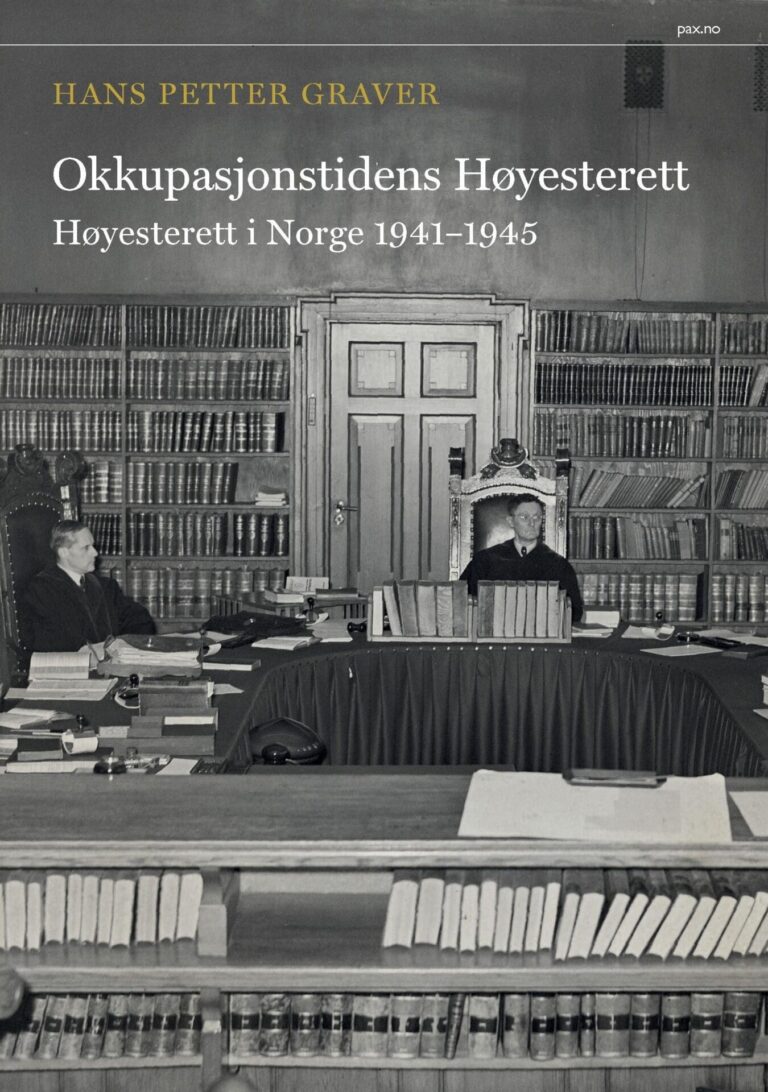
In most democratic societies, the courts are expected to be a check on government. The rise of tyranny usually involves pressure on the courts. And the courts in such circumstances often yield, beginning to defer to political leaders. Professor Hans Petter Graver of the University of Oslo has demonstrated how the Norwegian Supreme Court was “nazified” during World War II and how they fulfilled their obligations. The Nazi party replaced all the judges with new ones from their own ranks. Yet, the occupiers’ supreme court did not merely follow the new rulers, for a large part, they operated as an independent and ordinary court; however, mostly in private and administrative cases. They did not merely operate as politicians, and they probably thought of themselves as being professional jurists.

The current government in Georgia, held by the party Georgian Dream, is not a Nazi party. Still, they follow the same script that has become a mainstay among states devolving into autocracy. And central to this script, as Timothy Snyder summarizes it, is the subordination of courts.
Judges have some room for maneuver, even under autocratic rule. In a more recent book, Hans Petter Graver has portrayed a dozen “legal heroes”, judges who stand firm in the face of sanctions and repression in the face of not just the nazi regimes, but also in contemporary crises. One these heroes is Malgorzata Gersdorf, the head of the Polish Supreme Court during the attacks from the right-wing PIS party in 2018. PIS altered the pension age for judges, which is a well-rehearsed excuse for replacing them with their own politically selected candidates. Gersdorf was under severe pressure to stand down but decided to refuse. Large demonstrations in her support resulted. Her decisions slowed down Poland’s decay into autocracy.
It is too early to tell whether some Georgian judges use the lessons provided by Graver’s examples. But it is possible, since his book was translated into Georgian in 2024.