By Moreta Bobokhidze, who grew up inside Georgia’s alternative scene
3 minutes reading time.
I spent my teenage years in Georgia’s underground culture, in rehearsal basements, improvised studios, and half‑lit galleries where musicians, painters, and performers created the emotional vocabulary of our generation. I was never a formal musician, but I still attempted to form a girls’ band, hoping we could voice our pain through music. I learned early that art is not entertainment but survival and defiance. Art is a weapon – heavy, unpredictable, and impossible to control.
And that is precisely why the current Georgian government fears it.
Across Georgia today, artists and musicians who refuse to align with the ruling party are facing intimidation, harassment, and violence. This is a coordinated strategy to silence cultural voices that inspire independent thought the very thing authoritarian systems cannot tolerate.
The case of Kordz (Alexandre Kordzaia) makes this painfully clear.
Kordz did something profoundly simple and profoundly dangerous: he revived old Georgian songs and gave them new life. He made youth sing lines their grandparents carried through wars and uprisings including the one that says “it is an honor to die for the homeland.” He awakened a cultural memory that cannot be controlled by government messaging.
And that is exactly what terrifies Bidzina Ivanishvili.
Because when a musician can awaken a generation, he becomes more influential than any minister. When a song spreads faster than propaganda, it becomes a threat. When art makes people feel, people become harder to govern through fear.
So the system reacts the way authoritarian systems always have with intimidation, violence, and coordinated disinformation.
Kordz was chased by men waiting outside a relative’s home. He was smeared online by government‑aligned influencers. Pro‑government TV channels repeated the same script calling him “radical,” “extremist,” even “fascist.” And in a moment that revealed the depth of the government’s hostility toward independent culture, the Chairman of the Georgian Parliament, Shalva Papuashvili, publicly labeled Kordz a “fascist” and attacked international donors who supported the art festival where he planned to performe.
The festival cancelled after orchestrated propaganda campaigns. Pro-government social media networks tied to ruling‑party interests amplified degrading narratives, attacking not only his music but his character, his family, his right to exist as an artist. This is not media bias but a state‑aligned disinformation machine.
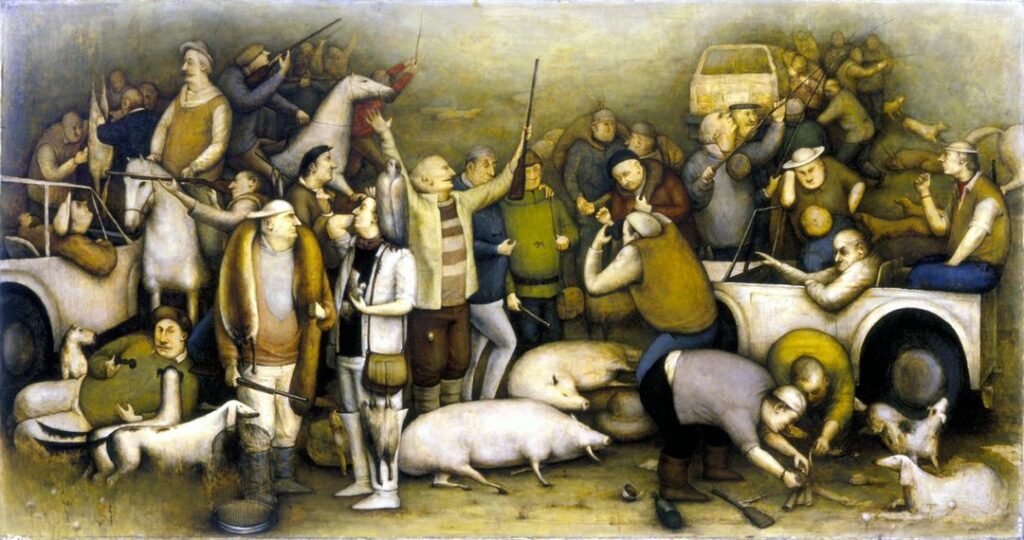
For EU readers, the pattern is familiar because Europe has seen it before.
Georgia has lived through this before. During the Soviet era, artists who refused ideological obedience were destroyed. One of the clearest examples is Paolo Iashvili, the modernist poet of the Blue Horns movement. In 1937, during Stalin’s Great Terror, he was dragged into a coercive meeting at the Writers’ House in Tbilisi, pressured to denounce his colleagues, and threatened with arrest. Instead of submitting, he walked out and shot himself a final act of resistance against a regime that demanded the destruction of his integrity. His death became a symbol of how Soviet power punished creativity, independence, and emotional truth.
Germany’s history offers another parallel one that highlights how women artists were targeted. Anita Rée, a German avant‑garde painter of Jewish descent, was one of the first victims of Nazi cultural persecution. Her modernist work was labeled “degenerate,” removed from museums, and purged from collections. As hostility and surveillance intensified, she became increasingly isolated and died by suicide in 1933, just months after Hitler came to power. A museum groundskeeper secretly hid her paintings in his apartment to save them from destruction. Rée’s fate shows how authoritarian regimes fear not only art, but women who create it women whose independence, modernity, and emotional truth threaten the ideology of obedience..
The logic behind these historical persecutions is identical to what we see in Georgia today. Pro‑government TV channels coordinate messaging with remarkable precision. One channel introduces a smear; another repeats it; a third amplifies it with emotional manipulation, social media accounts tied to political networks spread degrading narratives.
For European audiences, the question is not only what is happening to Georgian artists, but why it matters.
It matters because Georgia is part of Europe’s cultural and democratic space whether or not its current leaders admit it. It matters because the repression of artists is often the first sign of a deeper authoritarian turn. And it matters because the EU, Norway, and Sweden have long supported Georgia’s civil society, cultural institutions, and democratic development. When artists are attacked, it signals a broader assault on the values Europe seeks to protect.
I think back to the musicians and painters who shaped my teenage years, the ones who believed Georgia could be freer than its past. They were not politicians. They were not activists. They were simply creators who refused to be afraid. My own attempt to form a girls’ band was part of that same instinct: to turn pain into sound, fear into rhythm, silence into voice.
The message directed at artists like Kordz is unmistakable: independent creativity is being reframed as a security threat. But the real threat is not to national stability it is to political control. Art expands public consciousness, and consciousness is the one thing authoritarian systems cannot regulate.
Kordz’s revival of old Georgian songs reconnected a generation to its cultural memory. That alone was enough to provoke a campaign of intimidation. His influence lies not in political activism, but in the simple fact that he made young people feel connected, courageous, and culturally awake!
Governments that fear accountability often fear artists first. Not because artists undermine order, but because they undermine obedience. Europe knows this story well, it is woven into its own history of resisting authoritarianism.